
lifuyan78@gmail.com
18822971180
In the fields of powder metallurgy and composite materials, the core value of a frame-type hydraulic press lies in its high-rigidity frame, which provides superior resistance to off-center loading, alongside precise control over pressure and displacement. Powder compaction requires uniform density distribution, while the molding of composite materials demands a stable temperature and pressure environment; the frame structure effectively minimizes structural deformation during the forming process, ensuring product consistency. The following insights are provided by the team at Jianlong Hydraulic Technology—please feel free to reach out with any inquiries!
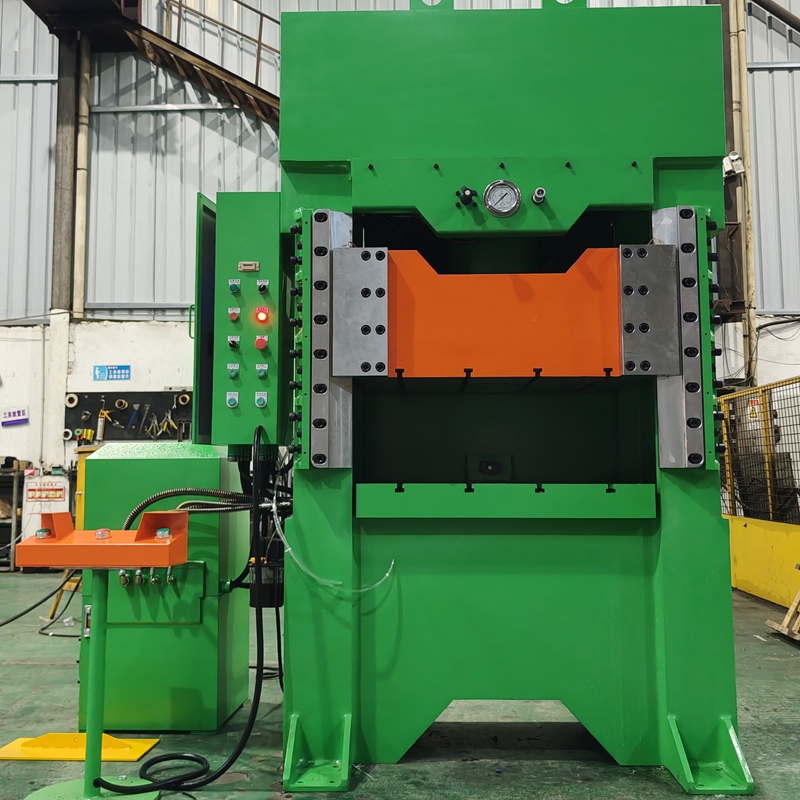
1. Powder Metallurgy: From Metal Powders to the Compaction of Specialized Sheets
Frame-type hydraulic presses cater to a wide range of compaction needs—from conventional metal powder components to functional sheets made from nanopowders. The key lies in utilizing servo or proportional control systems to achieve multi-stage pressurization and sustained pressure holding.
1.1 Forming of Metal Powder Components
A 500-ton servo-driven frame-type hydraulic press is specifically designed for the compaction of iron-based and copper-based powders. In the automotive sector, it is used for the mass production of components such as engine valve seat inserts and brake pad substrates, achieving a daily output of over 2,000 units with a 99.5% pass rate and density fluctuations controlled within ±0.02 g/cm³. For copper powder applications, the 500-ton model is ideal for precision copper bushings and conductive terminals, while the 800-ton model is employed for compressing copper scrap into briquettes or producing large copper billets; multi-stage, stable pressure application ensures the removal of air from the gaps between powder particles, thereby increasing the density of the compact.
1.2 Nanopowders and Functional Sheets
Frame-type hydraulic presses in the 630-ton to 800-ton range are used for the densification of materials such as nano-insulation boards, aerogel composite panels, powder metallurgy sheets, and ceramic composite boards. By utilizing adjustable pressing speeds (with working speeds as low as 6–20 mm/s) and sustained pressure holding, the equipment prevents issues like material spring-back and uneven density. This makes it well-suited for the mass production of products such as thermal insulation components for new energy vehicle batteries and insulation panels for the construction industry.
2. Composite Materials: Compression Molding of Thermosets and Thermoplastics
Composite material molding places high demands on equipment regarding temperature control, rapid response, and pressure uniformity. A frame-style structure is the preferred choice for processes such as SMC/BMC and GMT.
2.1 Thermoset Composites (SMC/BMC/FRP)
Integrated frame-style hydraulic presses are used for the compression molding of fiber-reinforced plastic (FRP) products, as well as bulk molding compounds (BMC) and sheet molding compounds (SMC). Such equipment must be equipped with electric heating modules (e.g., capable of reaching temperatures ≥300°C with a thermal stability of ≤±5°C) and multi-stage pressure control to ensure proper filling of complex cavities and high-quality curing. For the production of parts with exceptionally large surface areas, large-scale FRP hydraulic presses may utilize a prestressed tie-rod frame structure.
2.2 Thermoplastic Composites (GMT/LFT)
The compression molding of glass-fiber-reinforced thermoplastics (GMT) requires equipment characterized by high operating speeds and robust stability; frame-style hydraulic presses are the standard choice. These machines are employed in the production of lightweight structural components for the automotive and aerospace industries, leveraging the rigidity of the frame to ensure uniform pressure distribution during rapid mold closing.
2.3 Automotive Interior Composites
4,000-ton class frame-style hydraulic presses are used for the hot or cold compression molding of automotive components such as carpeting, headliners, and door trim panels, accommodating materials including polyurethane, EVA, and glass-fiber composites. In actual production, these presses can achieve dimensional accuracy within ±0.5mm for complex, single-shot molded parts, while keeping the batch defect rate below 0.8%.
3. Key Considerations for Equipment Selection
3.1 Powder Metallurgy
Priority should be given to servo-control precision and pressure-holding stability. A 500-ton class press is sufficient for most metal powder components, while 630–800 ton class presses are suitable for large-sized or high-density parts. It must be ensured that the pressing force required for a single compact does not exceed 80% of the machine's nominal capacity. 3.2 Composite Materials
For composite material applications, additional consideration must be given to the heating system configuration (including electric heating capacity and temperature uniformity) as well as rapid downward/return speeds to meet the cycle time requirements of the molding process. Molding processes for thermoset materials prioritize precise temperature control, whereas those for thermoplastic GMT (Glass Mat Thermoplastic) place greater emphasis on speed and stability.
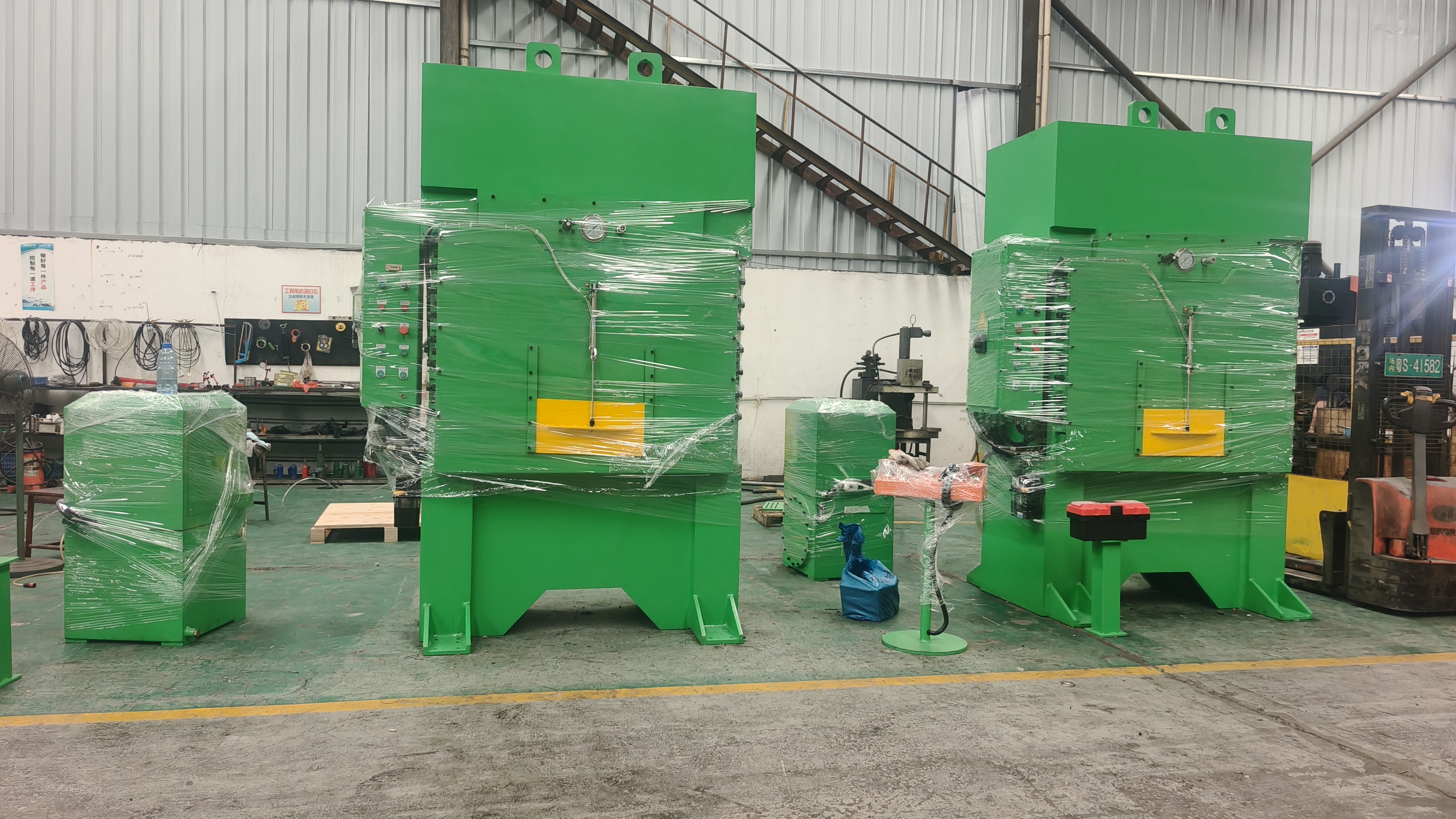
If you are working with specific powder types (such as iron-based, copper-based, or nanopowders) or composite material processes (e.g., SMC, GMT), the experts at Jianlong Hydraulic Technology can assist you in determining the appropriate tonnage and configuration. Please contact us for further consultation regarding frame-type hydraulic presses. Jianlong Hydraulic Technology currently offers customized frame-type hydraulic presses with capacities ranging from 100 to 5,000 tons. We possess mature technology and extensive experience, with capabilities to provide integrated solutions—including automated production lines, chillers, and air compressors. All our hydraulic presses are CE-certified and fully compliant with the EU Machinery Directive (2006/42/EC). Our products are exported to Europe and the Americas, including Germany, the United States, Mexico, and Portugal. Should you have any questions or procurement requirements, please reach out to us (or scan the WhatsApp QR code below). Jianlong Hydraulic Technology is dedicated to providing you with personalized, customized, and professional solutions.

Contact: Jojo
Phone: 18822971180
E-mail: lifuyan78@gmail.com
Whatsapp:+8618822971180
Add: Guangyi Industrial Park, No.2 Jinfu West Road, Tanglip, Liaobu Town, Dongguan City, Guangdong Province, China
We chat