
lifuyan78@gmail.com
18822971180
This issue delves into the applications of leather punching hydraulic presses in the bag and handbag industry. This is a prime example of combining traditional craftsmanship with modern mechanical power, crucial for improving product quality, efficiency, and design freedom.
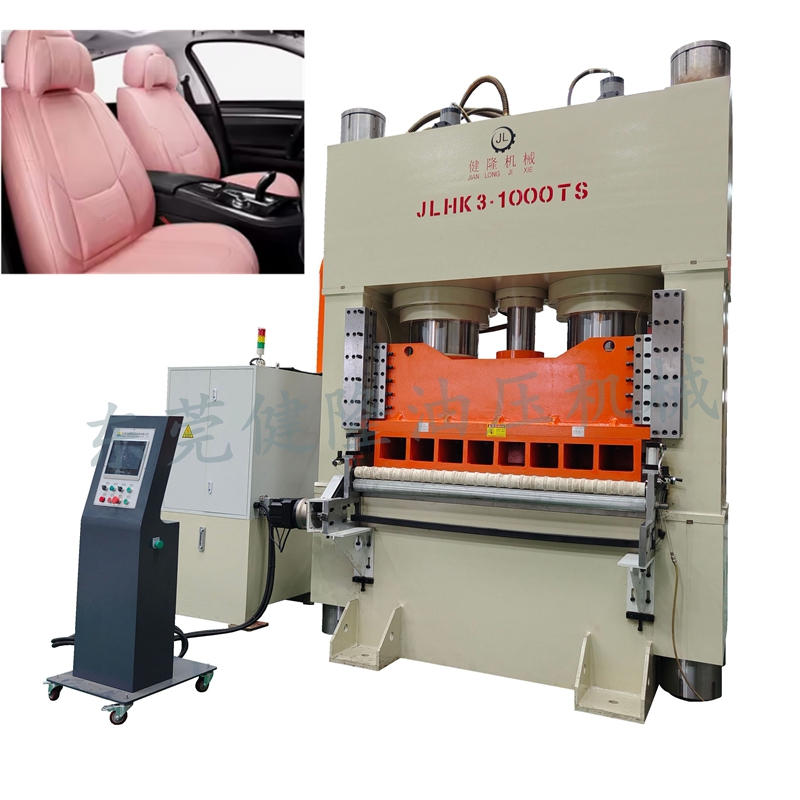
1. Core Positioning: Precision Forming from Materials to Components
In bag and handbag manufacturing, leather punching hydraulic presses are primarily used not for overall forming, but for the precision punching, perforation, and embossing of key components. They are key equipment for achieving complex designs, functionality, and standardization.
2. Main Application Scenarios and Processes
2.1 Functional Punching
This is the most common and important application, directly related to the product's functionality and user experience.
• Ventilation Holes:
◦ Applications: Back panels of sports backpacks, bottoms of laptop bags, sides of footwear bags.
◦ Process: Using molds with round holes, teardrop holes, or other special shapes to perform regular array punching.
◦ Requirements: Consistent hole shape, smooth, burr-free edges, and precise arrangement.
• Drawstring Holes/Constrictor Holes:
◦ Applications: Tightening systems for drawstring bags, bucket bags, and backpacks.
◦ Process: Punching D-ring holes, swivel holes, or round buttonholes, often combined with subsequent metal buttonhole inlay processes.
◦ Requirements: High dimensional accuracy, precise positioning, and perfect matching with ropes or hardware.
• Mounting Holes:
◦ Applications: Pre-drilled holes for mounting shoulder strap buckles, zipper pulls, decorative buckles, labels, etc.
◦ Process: Punching square, round, or irregularly shaped holes according to the mounting feet dimensions of the hardware.
◦ Requirements: Extremely high positional accuracy to ensure consistency in batch products and facilitate subsequent assembly.
2.2 Decorative and Design-Oriented Punching This is a core process for enhancing product added value and aesthetics.
• Openwork Carving:
◦ Applications: Surface decoration of high-end women's bags and fashionable handbags, forming exquisite openwork patterns.
• Process: Using complex laser-cutting or etching dies, continuous, fine patterns are punched into leather. A hydraulic press provides stable, high pressure, ensuring a single-pass punching with clean, sharp edges.
• Advantages: More efficient than laser engraving (allows for multi-layer cutting), no scorched edges (for some leathers), high throughput.
• Precision Contour Cutting:
• Applications: For cutting the outlines of small parts such as signs, leather tags, internal compartments, and small leather goods (e.g., coin purses, card slots).
• Process: Using steel die-cutting molds that match the part's shape, the final shape is punched directly from a large sheet of leather, replacing or supplementing laser cutting and hand cutting.
• Advantages: Neat edges, high perpendicularity, extremely high efficiency, particularly suitable for standardized, high-volume parts.
2.3 Special Effects and Combination Processes
• Semi-transparent Embossing (Kiss Cut):
• Applications: For embossing pattern grooves into the leather surface (for easy folding) or creating "stamp hole" style tear lines.
◦ Process: Using a specially designed die, pressure is precisely controlled to cut only the surface layer or most of the leather, preserving the thin connecting layers. This requires the hydraulic press to have extremely high pressure and stroke control precision.
• Multi-layer composite material punching:
◦ Application: Punching composite materials made of leather, sponge, non-woven fabric, PVC, etc., bonded together.
◦ Process: The powerful pressure of the hydraulic press can cleanly cut through all layers in one go, ensuring the contours of each layer are aligned, which is difficult to achieve with ordinary cutting blades.
3. Why Choose a hydraulic press? (Core Advantages)
3.1 Huge Punching Force: Easily handles punching of multi-layered thick leather, hard leather, or composite materials, especially for large-area, complex-shaped molds that require continuous and stable high pressure; the hydraulic press is the best choice.
3.2 Stable and Controllable Pressure: The pressure provided by the hydraulic system is very stable from start to finish, without impact or vibration. This is crucial for processes such as kissing and indentation that require precise pressure control, preventing tearing or damage to the leather.
3.3 Large working stroke and spacious operation: The open or C-shaped structure of the hydraulic press facilitates the placement and retrieval of large areas of leather and molds, and also allows for integration with automatic feeding systems.
3.4 High cost-effectiveness: Compared to precision mechanical punch presses of the same tonnage, hydraulic presses are less expensive, easier to maintain, and better suited to the non-homogeneous nature of leather, a material with slight variations in thickness.
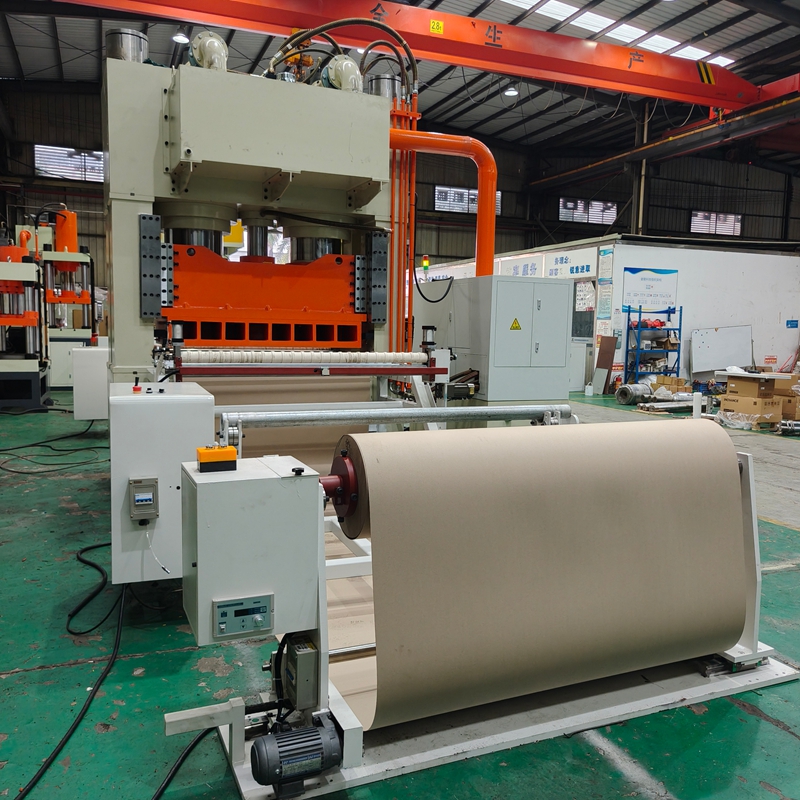
In the bag and handbag industry, leather punching hydraulic presses have evolved from simple "hole punchers" into core manufacturing equipment that integrates functionality, aesthetics, and efficiency. They allow designers' creative ideas (such as complex cutouts) to be realized efficiently and precisely, and also ensure the functionality and consistency of mass-produced products. Choosing a hydraulic press with appropriate tonnage, good precision and control performance, and high-quality specialized molds, is a wise investment for bag companies to enhance their core manufacturing capabilities.

Contact: Jojo
Phone: 18822971180
E-mail: lifuyan78@gmail.com
Whatsapp:+8618822971180
Add: Guangyi Industrial Park, No.2 Jinfu West Road, Tanglip, Liaobu Town, Dongguan City, Guangdong Province, China
We chat