
lifuyan78@gmail.com
18822971180
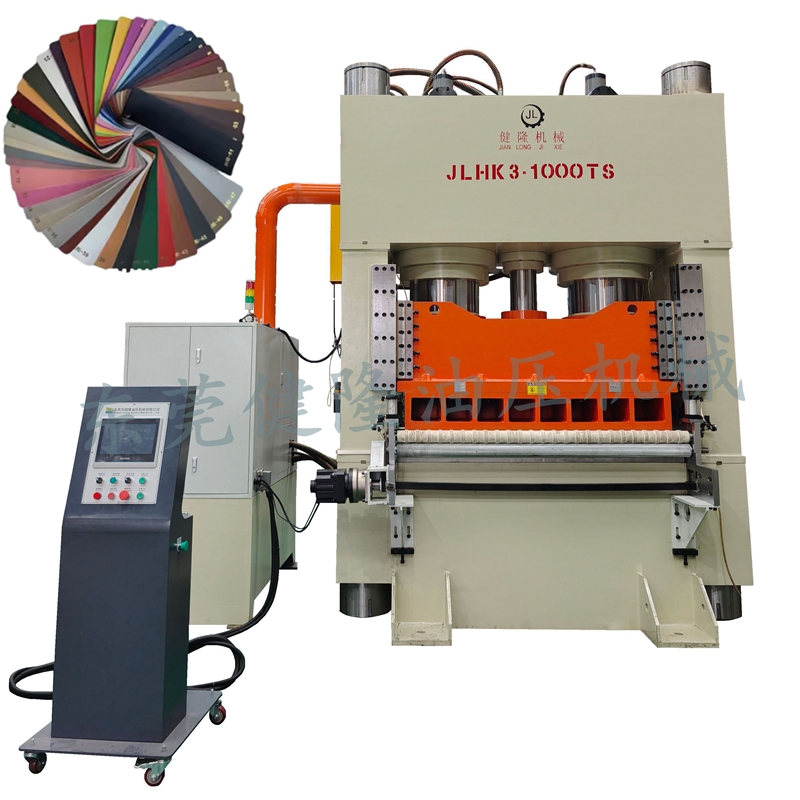
In this industry with extremely high requirements for aesthetics, texture, functionality, and safety, leather punching hydraulic presses play a crucial role. In automotive interiors, the main purpose of punching leather (including genuine leather and high-performance synthetic/PU leather) can be summarized in three points: functionality, aesthetics, and weight reduction. Leather punching hydraulic presses, or similar large-tonnage hydraulic presses, are ideally suited to the automotive industry's large-scale, high-quality, and consistent production needs due to their high pressure, large worktable, and high precision. Below, let's look at the sharing from Jianlong Hydraulic Technology:
1. Specific Application Components and Processes
1.1 Automotive Seats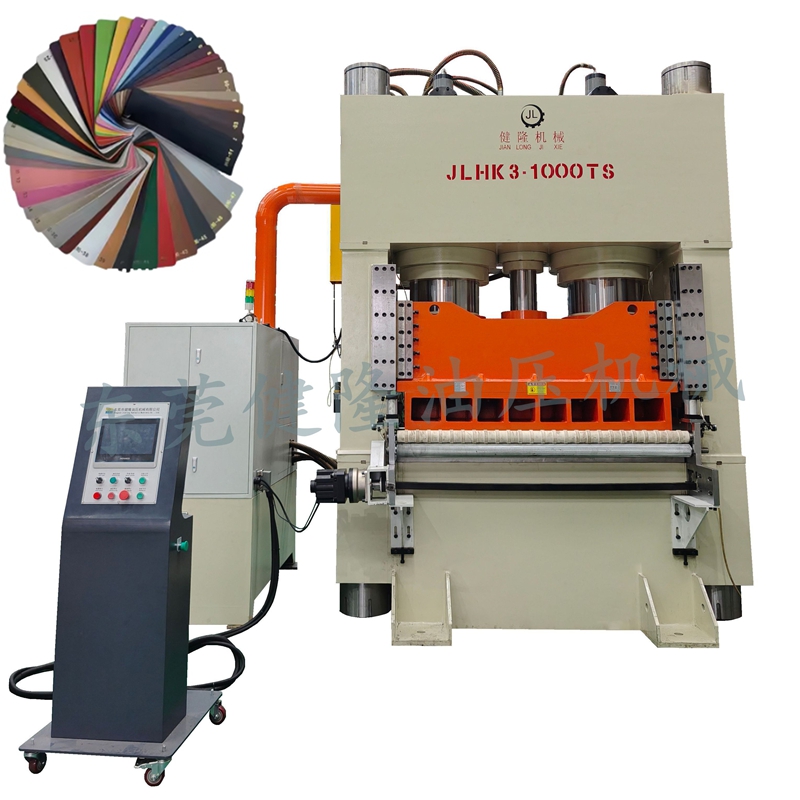
◦ Ventilated Seat Holes: This is the most typical and largest-volume application. Dense arrays of tiny holes (typically 1-3mm in diameter) are punched into the leather of the seat back and cushion, allowing airflow and achieving active ventilation/suction functions for the seat, improving comfort.
◦ Decorative stitching holes: Guide holes are punched in areas requiring a "real stitching" effect to ensure precise threading by the automated sewing machine, guaranteeing a consistent and aesthetically pleasing stitch pattern.
◦ Regional perforation: Different perforation patterns are used on the side bolsters and center area of the seat, combining functionality and visual design.
1.2 Steering wheel cover
◦ Ventilation and anti-slip holes: Perforations are punched in the 3 o'clock and 9 o'clock grip areas of the steering wheel to increase breathability and friction, improving driving safety and comfort.
◦ Decorative patterns: Brand logos or decorative patterns are stamped on the steering wheel spokes or center area.
1.3 Door panel interior trim/armrest
◦ Speaker cover decorative holes: Patterns that combine acoustic permeability and aesthetics are punched in the leather-wrapped speaker areas of the door panels.
◦ Armrest area perforations: Enhancing tactile feel and breathability.
1.4 Instrument Panel/Center Console Wrapping
◦ Decorative Perforations in High-End Models: Fine perforation is performed on specific leather-wrapped areas as part of the interior design language, enhancing the sense of luxury and technology.
1.5 Headrests and Center Armrest
◦ Also used for ventilation, decoration, and other needs.
2. Special Technical Requirements for hydraulic presses (Far Exceeding Ordinary Leather Processing)
The automotive interior design field places extremely stringent requirements on hydraulic presses, which is where the equipment's value lies:
2.1 Extremely High Punching Precision and Consistency
◦ Requirements: Hole position accuracy must be ±0.1mm or even higher. Any deviation will result in uneven hole patterns, affecting aesthetics. More seriously, for ventilated seats, it will affect airflow uniformity, leading to functional failure.
◦ Equipment Countermeasures: A high-rigidity frame-type machine body (superior to a four-column type) must be used to ensure the parallelism of the slide block and worktable during long-term operation. A servo hydraulic system or high-precision proportional valve should be used to achieve closed-loop control of pressure and position.
2.2 Perfect Hole Quality (No Burrs, No Indentations, No Deformation)
◦ Requirements: The edges of the holes must be smooth and neat, without any leather fiber fraying. The leather surface must not have any marks from the die pressing or stretching deformation.
◦ Equipment Solutions:
■ Extremely Fast Cutting Speed: The die must cut the leather "instantly," reducing the time spent compressing the material. This requires an extremely fast response speed from the hydraulic system.
■ Precise Pressure Control: Employing "tactile pressure" control, the die quickly reaches the minimum pressure required for a precise cut after contacting the leather and immediately releases pressure.
■ High-Quality Dies: Using sharp laser-cut or etched dies, paired with a pad of suitable hardness.
2.3 Large Worktable and High Efficiency
◦ Requirements: To improve production efficiency, a "one-cut-many" mode is typically used, meaning multiple holes for seat covers are cut in one work cycle.
◦ Equipment Solutions: A large worktable size (e.g., 2.5m x 1.5m) allows for the simultaneous placement of multiple layers (usually 2-4 layers) of leather for cutting. This directly requires a large tonnage (e.g., 1000 tons) to ensure uniform punching force across the entire large area.
2.4 Automation and Intelligent Integration
◦ Requirements: Integration with upstream and downstream processes (e.g., leather cutting, spraying, sewing) to achieve production line automation.
◦ Equipment Solutions:
■ Integrate a vision positioning system or robotic arm to ensure precise placement of each piece of leather.
■ Equip with automatic feeding and automatic material collection/waste removal systems. Tiny scraps from punching must be efficiently removed; otherwise, they will affect the working environment and hole quality.
■ Formula Management: The HMI can store punching programs (pressure, speed, stroke, die position) for different car models and parts, allowing for one-click switching.
2.5 Traceability and Quality Control
◦ Requirements: The automotive industry requires traceable production data.
◦ Equipment Solutions: The PLC records the production parameters (time, pressure, number of passes, etc.) for each product and can upload them to the MES (Manufacturing Execution System) via network.
3. Process Flow Example (Taking Car Seat Ventilation Holes as an Example)
3.1 Loading: Pre-cut leather pieces (possibly pre-coated) are placed on the worktable mold by the operator or robotic arm and precisely positioned using positioning pins or a vision system.
3.2 Start-up: After pressing the buttons with both hands and confirming with a safety light curtain, the equipment starts.
3.3 Punching: The slide descends rapidly → upon contact with the leather, it switches to high-speed precision punching → instantly completing the punching of all holes → immediately releasing pressure.
3.4 Waste Discharge and Collection: During the slide's return stroke, possibly accompanied by high-pressure air blowing, all tiny round leather scraps are blown into the waste collection system below. The punched workpieces are removed and flow into the next sewing or assembly process.
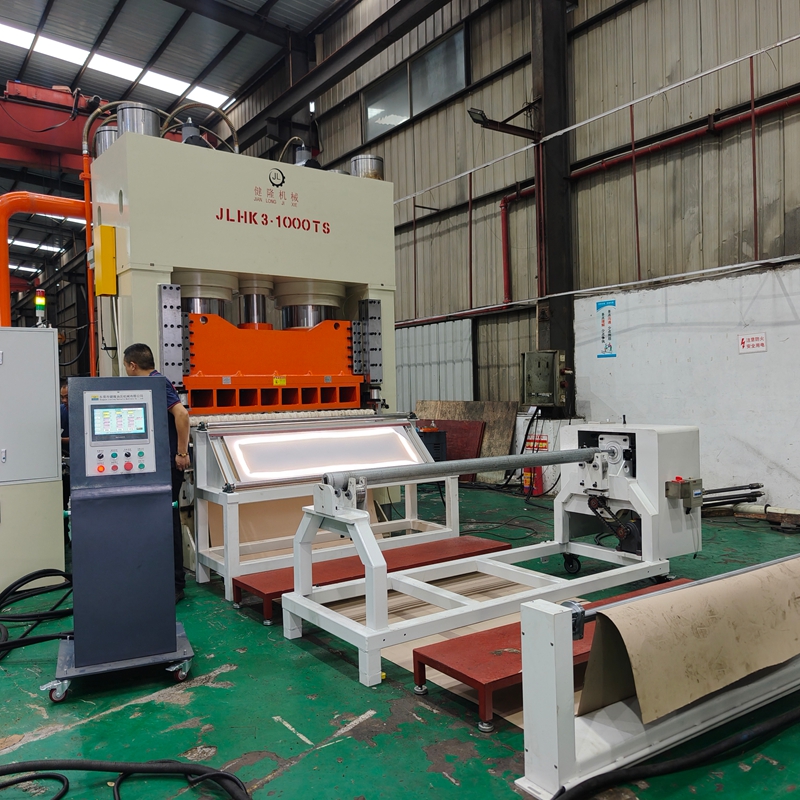
In summary, in the automotive interior manufacturing industry, leather punching hydraulic presses have evolved from simple "punching equipment" into a high-precision, highly automated, and deeply integrated intelligent production system. For more information/advice on leather punching hydraulic presses or to purchase other high-quality hydraulic presses, please contact us (or scan the WhatsApp QR code below). Jianlong Hydraulic Technology will provide you with personalized and customized professional solutions and is dedicated to serving you.

Contact: Jojo
Phone: 18822971180
E-mail: lifuyan78@gmail.com
Whatsapp:+8618822971180
Add: Guangyi Industrial Park, No.2 Jinfu West Road, Tanglip, Liaobu Town, Dongguan City, Guangdong Province, China
We chat