lifuyan78@gmail.com
18822971180
Within an automated production line, the 200-ton rotary multi-station hydraulic press functions as an integrated "processing center" capable of handling multiple operations with a high production cadence. Its core value lies in its ability to consolidate processes—which would otherwise require multiple machines and collaborative human effort—into a single unit. Through the synergy of a rotary table, robotic arms, and an intelligent control system, it achieves high-precision, high-efficiency automated batch production.
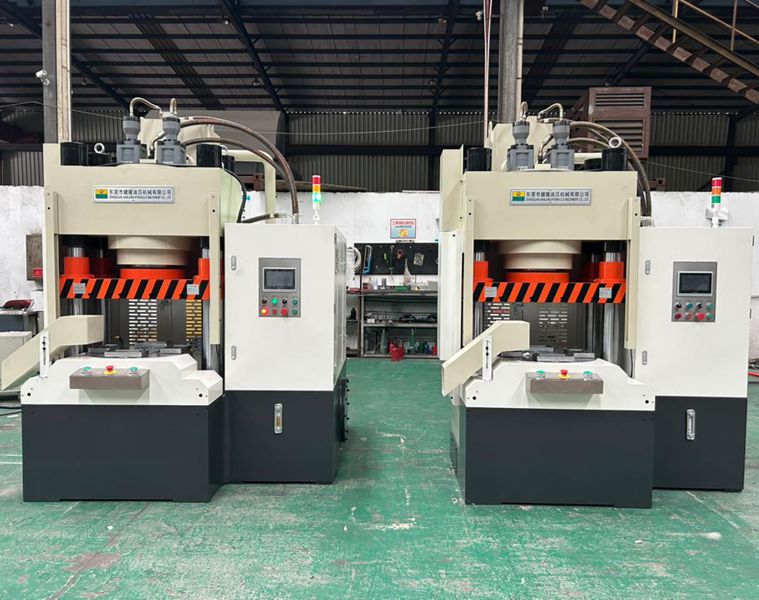
1. Automated Integration Method: Synergy Between Robotic Arms and the Rotary Table
The core of an automated production line is the automatic flow of materials, achieved primarily through the following methods:
1.1 Automated Robotic Loading and Unloading: Robotic arms for loading and unloading are installed at the infeed and outfeed sides of the rotary table, respectively. After workpieces are organized by a distribution device, the loading arm grips and precisely places them into the rotary table's stations; once processing is complete, the unloading arm automatically removes the finished parts, requiring no manual intervention throughout the process.
1.2 "Out-of-Station Operation" Safety Logic: The equipment employs a work cycle where loading occurs outside the stamping zone, the table rotates inward for the stamping operation, and then rotates outward for unloading. This ensures that operators' hands never enter the stamping zone during loading or unloading, providing a safety guarantee for the automated integration.
1.3 End-to-End Automated Closed-Loop: The entire production line—from raw material feeding, positioning, and stamping/forming to finished part unloading and palletizing—operates fully automatically.
2. Key Technical Features and Advantages
This type of automated integration offers advantages unmatched by traditional standalone machines:
2.1 Significant Efficiency Gains and Labor Reduction: The rotary table design allows for parallel "loading-pressing-unloading" operations, effectively eliminating equipment idle time associated with single-station presses. Automated loading and unloading drastically reduce reliance on manual labor, enabling a single operator to oversee multiple machines.
2.2 Integration of Continuous Multi-Process Machining: This is its most powerful advantage. By arranging different dies at various stations on a rotary table and using robotic arms to transfer workpieces between them, a single machine can perform continuous processing—including punching, bending, deep drawing, trimming, and riveting. Some manufacturers have even developed "rotary dual-unit hydraulic presses" that integrate two hydraulic presses with different functions into a single line, enabling simultaneous processing of different types.
2.3 Ensuring Processing Quality and Flexibility: Automated precision positioning and repeatable operations eliminate human error, guaranteeing product consistency and high accuracy. By changing fixtures or switching recipes, the equipment can rapidly adapt to the production of different workpieces, enabling flexible manufacturing.
2.4 Enhancing Operational Safety: Automated loading and unloading keep personnel away from hazardous stamping zones; combined with safety devices like light curtains, this drastically reduces the risk of accidents.
3. Examples of Typical Application Scenarios
3.1 Automated Production Line for Roof Bolt Plates: This is a classic application case for a 200-ton hydraulic press found in search results. The entire line comprises a 200-ton hydraulic press, a feeding mechanism, dies, a palletizer, and a strapping machine, capable of automatically executing every step from steel plate feeding, cutting, and punching/forming to the palletizing of finished products.
3.2 Automotive Parts and Home Appliance Manufacturing: Used for the high-volume, high-precision production of parts requiring multi-stage processing, such as automotive chassis components, seat frames, home appliance housings, and hardware fittings.
3.3 Tube End Forming: For processes requiring multi-stage extrusion—such as tube reduction, flaring, and end upsetting—the equipment can complete the entire operation within a single work cycle, offering extremely high efficiency.
4. Considerations for Equipment Selection
4.1 Clarify "Continuous Production" Needs: Assess whether your production line requires 24-hour, high-load, continuous operation. If so, the return on investment for this type of highly automated equipment will be substantial.
4.2 Analyze Processes and Cycle Times: Detail all the operations to be performed on a single machine (e.g., punching, bending, deep drawing) and the target production cycle time. This directly impacts the number of stations on the rotary table, the configuration of the robotic arm, and the complexity of the control system.
4.3 Evaluate the equipment manufacturer's customization and integration capabilities: Automated production lines usually require customization based on specific workpieces. Selecting a supplier with extensive experience in non-standard customization and strong system integration capabilities is crucial, as this determines the line's ultimate stability and efficiency.
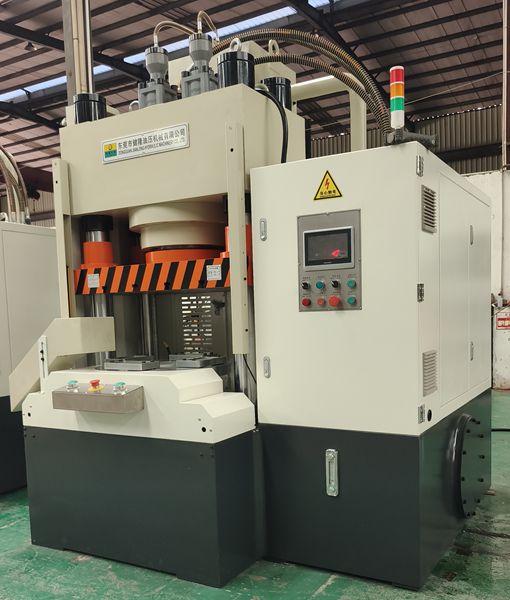
In summary, the 200-ton rotary multi-station hydraulic press is an ideal choice for automated production lines, particularly for high-volume part manufacturing scenarios that demand high levels of efficiency, quality, and safety. If you have specific part drawings or process requirements, we can assist you in further analyzing their suitability for this production line. Jianlong Hydraulic Technology offers customized hydraulic presses ranging from 10 to 5,000 tons (including supporting automated production lines, chillers, air compressors, and other equipment). All presses are CE certified and fully compliant with the EU Machinery Directive (2006/42/EC); our products are exported to markets in Europe and the Americas, including Germany, the USA, Mexico, and Portugal. Please contact us if you have any procurement needs (or scan the WhatsApp QR code below); Jianlong Hydraulic Technology is dedicated to providing you with personalized, customized, and professional solutions.

Contact: Jojo
Phone: 18822971180
E-mail: lifuyan78@gmail.com
Whatsapp:+8618822971180
Add: Guangyi Industrial Park, No.2 Jinfu West Road, Tanglip, Liaobu Town, Dongguan City, Guangdong Province, China
We chat