
lifuyan78@gmail.com
18822971180
The machine operates based on Pascal's law of static pressure transmission. It converts the mechanical energy of a motor into hydraulic pressure via hydraulic fluid, then outputs immense static pressure through a cylinder. Combined with multi-stage speed control, precise pressure holding, and sequential timing, it performs pre-forging, closed-die filling, and densification forming on 6061/7075 aluminum alloy billets at warm-working temperatures. The system integrates a hydraulic power unit, control valve assembly, actuating cylinder, machine frame, and an electrical servo control system. The following information is provided by the team at Jianlong Hydraulic Technology for your reference:
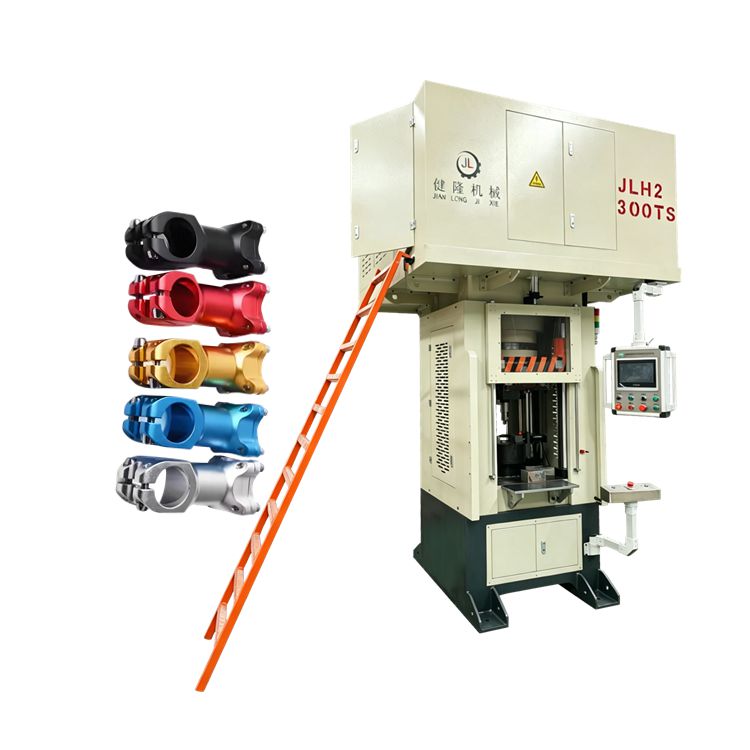
1. Fundamental Physical Principle: Pascal's Law
Pressure applied to hydraulic fluid within a closed circuit is transmitted uniformly throughout the system. The formula for calculating output force is:
F = P × A
P: System oil pressure (typically 16–32 MPa for forging)
A: Effective pressure-bearing area of the main cylinder piston
F: Actual forging force (tonnage)
By utilizing high pressure and large-diameter cylinders, forging forces of hundreds of tons can be achieved with relatively low system pressure. Furthermore, the output is a static squeezing force—free from the impact loads associated with forging hammers—making it ideal for the slow, plastic flow forming of aluminum alloys without disrupting the metal's grain flow lines; this is the primary reason hydraulic presses are chosen for aluminum forgings.
2. Five Major System Components (The mechanisms that implement the operating principles)
2.1 Hydraulic Power Supply System: Servo motor + variable displacement piston pump, oil tank, cooler, and filter. Responsible for generating high-pressure oil; the servo motor adjusts rotational speed and oil supply based on demand, delivering high power during the forging/pressurization phase and operating at low power during rapid no-load descent or return strokes.
2.2 Hydraulic Control Circuit: Prefill valve, proportional pressure valve, proportional flow valve, pressure-holding valve, directional control valve, and relief valve. These components control fluid flow direction, pressure magnitude, flow velocity, pressure holding/locking, and gradual pressure release. 2.3 Hydraulic Cylinder Assemblies
• Main working cylinder: Delivers the primary forging force in the downward stroke;
• Return cylinder: Drives the slide upward to reset after the forging operation is complete;
• Balancing cylinder: Counteracts the slide's dead weight, ensuring smooth downward movement without dropping or shuddering;
• Table ejection cylinder: Ejects the high-temperature stem forging that may be gripped within the die after forging;
• Multi-directional forging models feature additional horizontal side cylinders to enable lateral extrusion forming of hollow stems.
2.4 Mechanical Structure: Four-column or integral frame body, slide, heavy-duty guide mechanism, worktable, and dies. The rigid machine body absorbs all reaction forces generated during forging.
2.5 Electrical Closed-Loop Control System: PLC + touchscreen, pressure sensors, linear displacement encoders, and die temperature acquisition modules. Real-time monitoring of pressure, slide position, and die temperature; automatic execution of the preset forging process curve.
3. Complete Forging Cycle (Standard Six-Stage Workflow)
Based on the warm forging process for aluminum alloy stems, the equipment's automatic cycle logic is as follows:
1) Rapid descent with pre-fill (idle stroke/approach)
The slide descends rapidly toward the heated aluminum billet under its own weight; a negative pressure forms in the main cylinder's upper chamber, triggering the automatic opening of the pre-fill valve, allowing low-pressure oil from the tank to flow directly into the upper chamber via atmospheric pressure.
During this phase, the hydraulic pump outputs minimal flow against a very low load, rapidly completing the idle stroke to improve production cycle times without generating forging pressure.
2) Low-speed working stroke/extrusion (Core forming stage)
As the upper die contacts the high-temperature aluminum billet, the pre-fill valve closes, and the plunger pump builds up high pressure; a proportional flow valve regulates oil flow, controlling the slide's descent at a steady, low speed.
High static pressure is applied to the billet; the aluminum alloy—heated to the 400–520°C range—undergoes plastic flow, gradually filling complex cavity features such as curved surfaces, reinforcing ribs, and mounting bosses. Excess material is extruded into the flash gutter, completing the external forming of the blank. Low-speed, static-pressure extrusion ensures uniform metal flow, minimizing defects such as folds, surface peeling, and cracks.
3) High-pressure stabilization and dwell (critical for forging quality)
Once the slide reaches the bottom dead center (mold-closing position), the dwell valve locks the high-pressure oil chamber, maintaining the set pressure for 0.5 to 3 seconds.
Function: Compresses internal porosity and micro-voids in the aluminum, enhancing the stem's density and fatigue resistance; compensates for thermal contraction during cooling to ensure dimensional consistency; stabilizes flash thickness for high batch-to-batch uniformity. Mechanical presses lack this dwell function and cannot meet the forging requirements for high-end 7075 aluminum stems.
4) Gradual, staged pressure release
Upon completion of the dwell period, the control system executes a staged, slow pressure release rather than an instantaneous discharge.
This prevents hydraulic shock, machine vibration, and mold bounce caused by sudden high-pressure release; avoids micro-cracking in the hot forging due to sudden stress changes; and protects the mold and main machine structure.
5) Slide return stroke
After pressure release, the hydraulic circuit reverses flow, directing high-pressure oil into the main cylinder's lower chamber. Assisted by the return cylinders' thrust, the slide rises smoothly to its initial upper position; balance cylinders counteract the slide's weight throughout the movement, ensuring smooth operation without impact. Once the slide is in position, the pump unit switches to low-pressure standby mode.
6) Workpiece ejection and standby
After the slide returns to position, a built-in ejection cylinder in the worktable ejects the forged stem from the female die; a robotic arm removes the part and loads a new heated billet, while the machine stands by for the signal to initiate the next forging cycle.
4. Closed-loop control principle of servo forging hydraulic presses (mainstream models)
Standard hydraulic presses have fixed, non-adjustable pressure and speed, whereas servo models utilize dual closed-loop control (pressure and displacement):
Pressure sensors provide real-time feedback on cylinder pressure, and linear scales provide real-time feedback on the slide's actual position. This data is transmitted to the PLC, which dynamically adjusts the servo motor speed and the oil pump's output flow and pressure. The entire process curve is fully editable—including rapid descent speed, forging/pressing speed, forging pressure, dwell time, and return speed. Dedicated recipes can be stored for standard 6061 stems and high-strength 7075 stems, allowing for one-touch switching between products. Additionally, power consumption is reduced during the no-load phase, resulting in significant energy savings.
5. Supplementary Principle: Multi-directional Hydraulic Forging Press for Stems (Hollow, Integrated Racing Stems)
Standard vertical hydraulic cylinders apply pressure only vertically, making it impossible to form hollow or lateral interlocking structures in a single operation. This equipment supplements the vertical main cylinder with horizontal side cylinders on the left and right: the main cylinder closes and pre-tightens the mold, while the side cylinders simultaneously apply lateral pressure. This multi-directional squeezing action forms the hollow cavity structure in one step. A synchronous valve assembly ensures the side cylinders exert force in unison, preventing issues such as unbalanced loading, mold misalignment, or mold scoring.
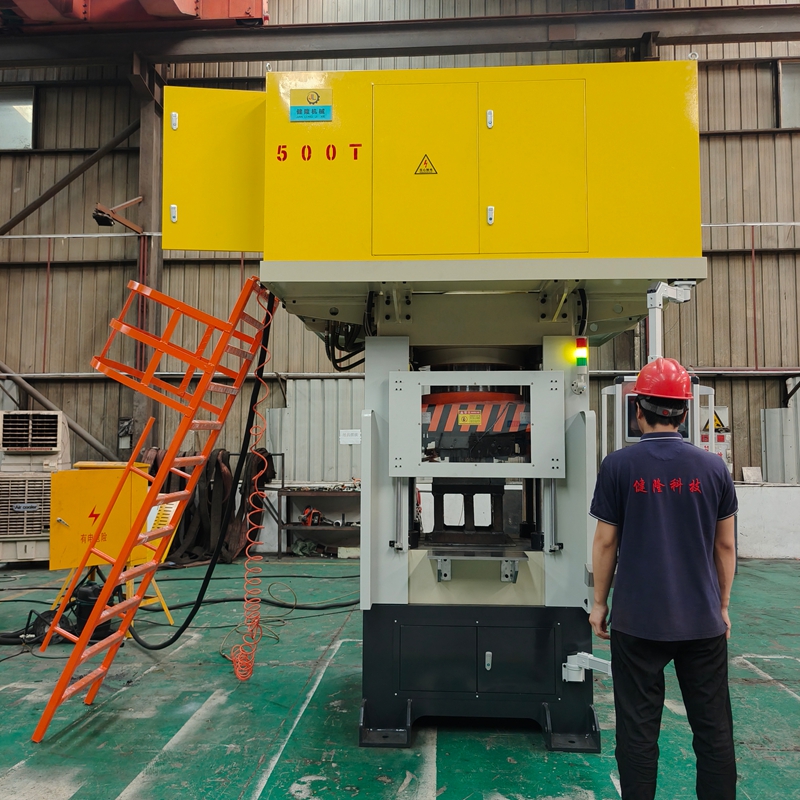
Please contact us for further information or advice regarding hydraulic forging presses for stems. Jianlong Hydraulic Technology currently offers Custom hydraulic presses ranging from 10 to 5,000 tons (including supporting automation lines, chillers, air compressors, and other equipment). All presses are CE certified and fully compliant with the EU Machinery Directive (2006/42/EC). Our products are exported to markets in Europe and the Americas, including Germany, the USA, Mexico, and Portugal. If you have any inquiries or purchasing needs, please contact us (or scan the WhatsApp QR code below); Jianlong Hydraulic Technology is dedicated to providing you with personalized, customized professional solutions.

Contact: Jojo
Phone: 18822971180
E-mail: lifuyan78@gmail.com
Whatsapp:+8618822971180
Add: Guangyi Industrial Park, No.2 Jinfu West Road, Tanglip, Liaobu Town, Dongguan City, Guangdong Province, China
We chat