
lifuyan78@gmail.com
18822971180
Bicycle stems are small, closed-die warm forgings characterized by irregular curved surfaces, integral bosses, and varying wall thicknesses. Typically formed from 6061 or 7075 aluminum alloys, they utilize the hydraulic press's capabilities for low-speed extrusion, extended dwell times (pressure holding), and servo-controlled pressure regulation. Consequently, the entire die assembly—comprising the die base, punch and die inserts, heating and temperature control, guiding, venting, ejection, locking mechanisms, and lubrication systems—features a specialized design. These features, combined with the static-load forging nature of hydraulic presses, distinguish this tooling from cold stamping dies or hammer forging dies. The following information is provided by the team at Jianlong Hydraulic Technology for your reference:
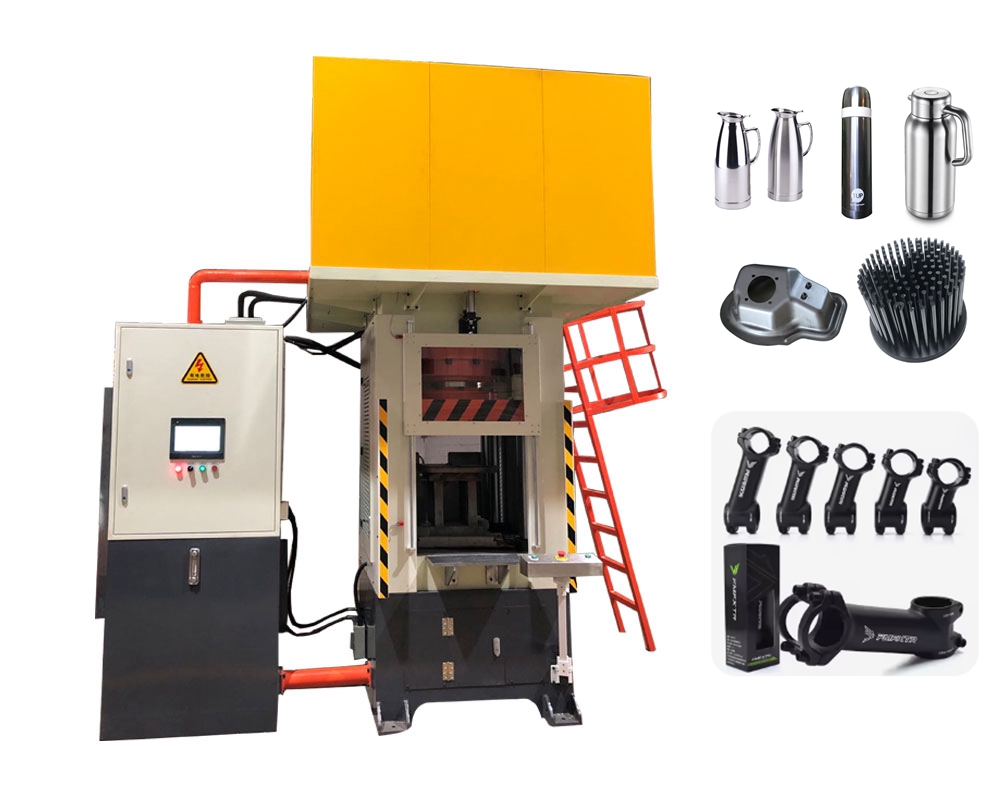
1. Die Material and Heat Treatment Suited for Warm Forging (Core Characteristics)
1.1 Selection of Common Die Steels
H13 (4Cr5MoSiV1) hot-work die steel is commonly used for the main bodies of punches and dies; high-end, mass-production applications utilize specialized hot-forging steels such as 8407 and FDAC. Standard Cr12-series cold-work die steels are not used.
1.2 Strict Heat Treatment Requirements
Overall quenching and tempering hardness: HRC 48–52 for the cavity working surface and HRC 38–42 for the die base. The treatment balances high-temperature wear resistance, thermal fatigue resistance, and resistance to impact-induced cracking. For 7075 alloy forging, which requires higher extrusion forces, the lower end of the hardness range is selected to enhance toughness and prevent edge chipping.
1.3 High-Temperature and Thermal Cycling Resistance
Aluminum alloy billets enter the die at temperatures between 400°C and 520°C, while the die operates at a constant temperature of 200°C–300°C. The die steel exhibits excellent thermal fatigue resistance; repeated heating and cooling cycles are unlikely to cause heat checking (micro-cracking) or thermal erosion pitting, thereby extending the die's service life.
2. Cavity Structure: Closed-die forging design, matched to the static pressure filling characteristics of hydraulic presses
2.1 Closed-die structure with flashless or minimal-flash capability
hydraulic presses offer stable, high-pressure holding capabilities; the metal flows under pressure within a confined cavity, requiring only a very narrow flash gutter. Compared to open-die forging, aluminum utilization increases by over 10%, flash is minimal, and the grinding workload is significantly reduced. Continuous static hydraulic pressure ensures the material fully fills complex curved surfaces, clamping bases, and thin-walled sections with stiffening ribs.
2.2 Smooth cavity transitions and large-radius fillet design
The stem features arc transitions, concave-convex surfaces, and areas of varying wall thickness; all cavity transitions utilize smooth fillets. Hydraulic forging involves slow extrusion-like flow; sharp corners easily cause folding or cracking in aluminum alloys, whereas smooth structures ensure continuous, intact metal flow lines, thereby enhancing the stem's fatigue strength.
2.3 Multi-stage cavity: A layout comprising pre-forging and finish-forging cavities
• Pre-forging cavity: Performs rough shaping and distributes deformation, preventing localized die overload caused by excessive deformation in a single finish-forging step.
• Finish-forging cavity: Precisely replicates the product's final shape, utilizing the hydraulic press's pressure-holding capability to achieve near-net-shape forming.
Most production lines employ a "one-die, two-cavity" layout, pressing two stems simultaneously; this matches the hydraulic press's stable output pressure and boosts production capacity.
3. Integrated constant-temperature control system linked with the hydraulic press (a signature feature of the stem forging die)
Fluctuations in die temperature are a critical concern in aluminum alloy warm forging: if the die temperature is too low, the aluminum billet's surface cools rapidly, reducing flowability and leading to under-filling; conversely, excessively high temperatures cause die sticking and result in surface oxidation and roughness on the forging. 3.1 Electric heating elements and temperature-sensing thermocouples are embedded within the mold assembly, ensuring stable, constant temperature control between 200°C and 300°C;
3.2 Thermocouple signals are integrated into the hydraulic press's PLC control system; the machine automatically triggers an alarm and pauses the pressing operation if temperature anomalies occur;
3.3 Internal cooling channels are incorporated into the mold; water cooling is activated during prolonged continuous production if the mold temperature exceeds limits, enabling closed-loop constant temperature control.
The temperature control system is synchronized with the hydraulic press's downward speed and pressure parameters, ensuring highly consistent quality during batch production.
4. High-strength mold frame and guiding structure designed to withstand the hydraulic press's high-pressure and sustained holding loads
4.1 Thickened, integrated mold frame and heavy-duty backing plates
The holding phase of the hydraulic press generates a constant high-pressure load for several seconds. The mold frame utilizes quenched and tempered 45# steel plate, while high-strength load-bearing plates are installed beneath the upper and lower backing plates to distribute concentrated stress, preventing frame deformation or die bursting. Given the high radial expansion forces inherent in closed-die forging, a prestressed retaining sleeve (shrink ring) is fitted around the outer circumference of the female die using an interference fit; this counteracts the radial tensile stress generated by material extrusion, effectively preventing die cracking.
4.2 High-precision heavy-duty guide pillar and bushing system
Oversized ball-bearing guide pillars or wear-resistant sliding guide pillars are employed with minimal clearance. The hydraulic forging stroke is smooth and shock-free; high coaxiality ensures precise mold alignment, allowing for controlled symmetry and uniform wall thickness in the stem component, thereby eliminating defects such as uneven wall thickness or mold misalignment.
4.3 Standardized mold base mounting structure compatible with the hydraulic press table's T-slots, enabling rapid changeover between different stem mold designs.
5. Specialized venting structure design to resolve gas entrapment defects in closed-die forging
5.1 In the enclosed space of the closed die cavity, water vapor (from heated aluminum billets), lubricant fumes, and air can become trapped deep within the cavity; this easily leads to defects such as incomplete filling (short shots), gas bubbles, and surface pitting. 5.2 Fine venting slots (narrow gaps of 0.08–0.15 mm) are machined into the die at the highest points of the stem's ribs and cavity corners, allowing excess gas to escape along with a small amount of flash; slot dimensions are strictly controlled to prevent excessive size, which could lead to material overflow and waste. The use of slow hydraulic extrusion ensures sufficient time for gas evacuation, overcoming the inadequate venting issues associated with the rapid impact of forging hammers.
6. Forced ejection mechanism synchronized with the hydraulic press's return stroke logic
After cooling and shrinking, the forged stem tends to grip the die cavity tightly; therefore, a hydraulic ejector mechanism is integrated into the die:
6.1 The ejection cylinder is built into the hydraulic press table, with the die's ejector plate connecting to the machine's ejection hydraulic circuit;
6.2 Upon completion of forging and the return of the slide, the machine applies ejection force to smoothly eject the forging; ejection force and speed are programmed into the hydraulic system to prevent bending or damaging the high-temperature forging.
Dies for high-end hollow-structure stems are also equipped with multi-point ejection systems to ensure uniform force distribution.
7. High-temperature specialized lubrication system and die-integrated lubrication structure
7.1 A water-based graphite lubricant designed for high-temperature forging is used in the die cavity; it withstands high temperatures and creates a barrier between the aluminum and the die surface, preventing the 7075 aluminum from sticking to the die or scoring the cavity surface;
7.2 Spray ports are incorporated into the die design for use with an automated spraying unit; lubricant is automatically applied in precise quantities after each forging cycle, with the lubrication process interlocked with the hydraulic press's operation sequence (downward stroke stop → spraying → material feeding → forging) to achieve a fully automated cycle.
8. Split-type lateral insert mold adapted for multi-directional hydraulic presses (for high-end hollow stems)
For integrated hollow stems produced via multi-directional forging (using a main cylinder plus lateral cylinders), the mold is equipped with corresponding lateral movable inserts:
8.1 Lateral inserts are driven by hydraulic side cylinders for synchronized mold closing and opening;
8.2 The inserts feature a split modular design; individual inserts can be replaced upon wear without replacing the entire female die, thereby reducing mold maintenance costs;
8.3 Wear-resistant liners and sealing structures are installed at lateral mating surfaces to prevent high-pressure aluminum material from leaking or flashing.
9. Structural features: easy maintenance and fatigue resistance
9.1 The mold cavity utilizes an insert-based structure; areas prone to wear—such as curved surfaces and sharp edges—are designed as independent inserts, allowing for localized replacement and lower repair costs;
9.2 All load-bearing and friction surfaces undergo nitriding treatment to enhance hardness and wear resistance, mitigating high-temperature wear and die-sticking issues;
9.3 Designed for the smooth, static loading characteristics of hydraulic presses, the mold offers a fatigue life far superior to that of forging hammer molds, capable of producing tens of thousands of parts during standard mass production.
10. Synergistic integration with the hydraulic press
All mold operations (mold closing, pressurization, dwell, mold opening, ejection, temperature control, and lubrication) are centrally controlled by the hydraulic press's PLC timing system. Process parameters—such as pressure, speed, and dwell time—are dynamically adjusted in synchronization with the mold's stress state, functioning as a unified, integrated system rather than a collection of independent components.
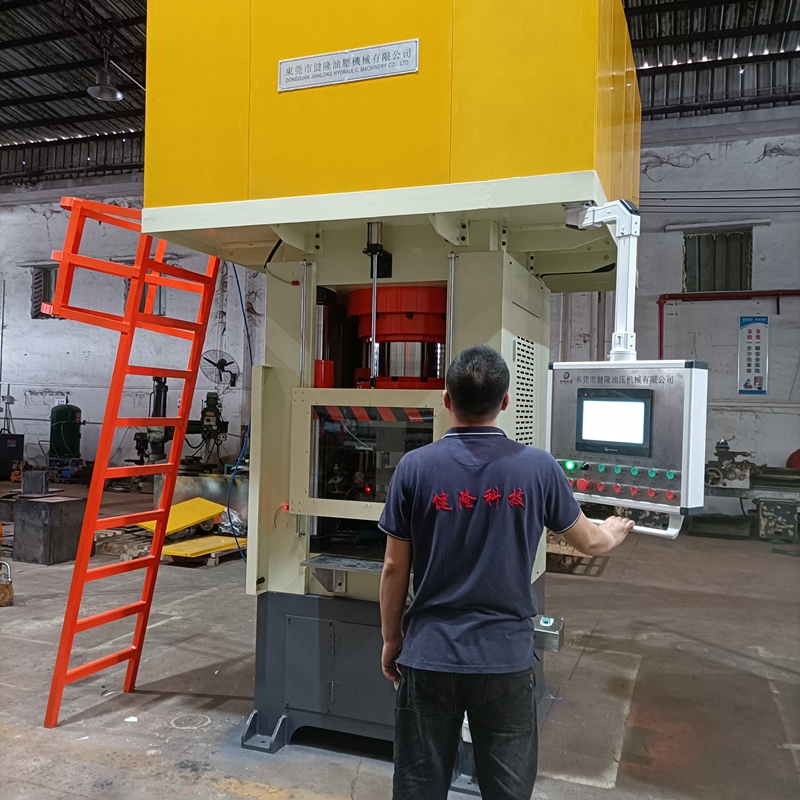
Please contact us for further consultation and recommendations regarding hydraulic presses for stem forging. Jianlong Hydraulic Technology currently offers Custom Hydraulic Presses ranging from 10 to 5,000 tons (including supporting automation lines, chillers, air compressors, etc.). All presses are CE certified and fully compliant with the EU Machinery Directive (2006/42/EC), with products exported to markets in Europe and the Americas, including Germany, the USA, Mexico, and Portugal. If you have any inquiries or purchasing needs, please contact us (you may also scan the WhatsApp QR code below). Jianlong Hydraulic Technology is dedicated to providing you with personalized, customized professional solutions and exceptional service.
Contact: Jojo
Phone: 18822971180
E-mail: lifuyan78@gmail.com
Whatsapp:+8618822971180
Add: Guangyi Industrial Park, No.2 Jinfu West Road, Tanglip, Liaobu Town, Dongguan City, Guangdong Province, China
We chat