
lifuyan78@gmail.com
18822971180
The core process of stamping and forming gold bars and bricks is a precision manufacturing process that permanently "transfers" the exquisite pattern on the mold onto the surface of the precious metal using immense pressure. The entire process requires extremely high precision and stable control, and can be roughly divided into three stages: initial blank preparation, the core stamping and forming process, and subsequent processing and inspection. Below, Jianlong Hydraulic Technology will provide a detailed breakdown for your reference!
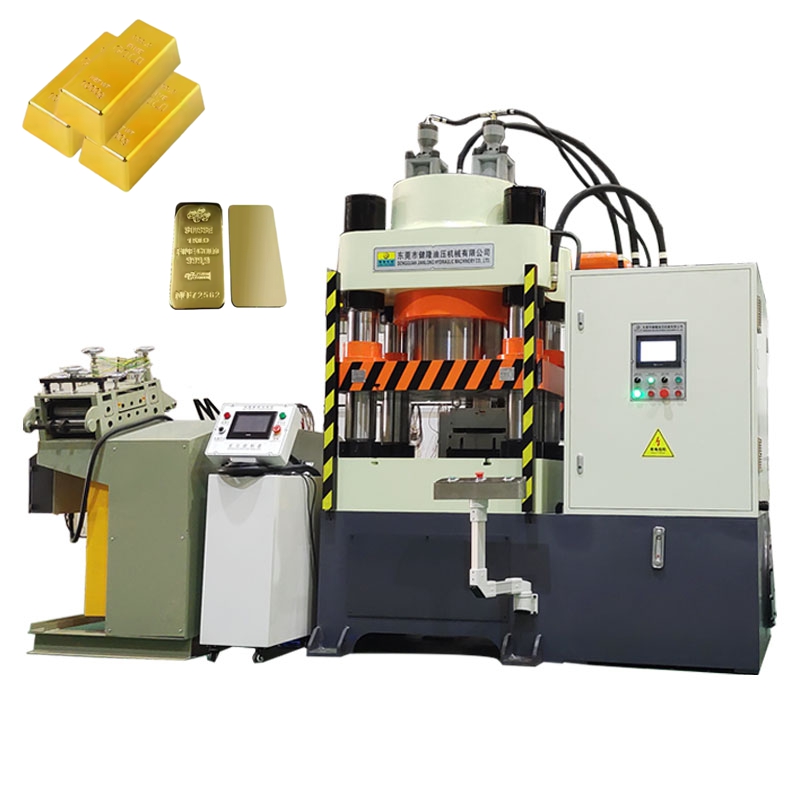
1. First Stage: Blank Preparation
This is the foundation of stamping, aiming to obtain metal blanks with accurate dimensions, smooth surfaces, and moderate hardness.
1.1 Material Preparation and Rolling
First, the smelted and purified gold is cast into sheets of the required specifications using a continuous casting machine. Then, these sheets are repeatedly rolled using a pressing mill (rolling mill) to process them into thin sheets or strips of uniform thickness that meet the requirements. This step determines the basic thickness of the final gold bar.
1.2 Blanking and Unloading
The rolled metal sheet is fed into a blanking machine (a type of stamping equipment), where it is stamped into a blank with a shape and size similar to the final product. At this stage, the blank may have burrs on its edges.
1.3 Blank Processing (Annealing and Cleaning)
After rolling and stamping, the metal hardens (work hardening), which is unfavorable for embossing. Therefore, the blank needs to be placed in an annealing furnace for high-temperature softening. The softened blank is then cleaned in a diluted acid solution or special solution to remove the oxide layer and oil. Finally, it undergoes edge grinding and polishing to obtain a bright finished blank.
2. Second Stage: Embossing
This is the most crucial step in the entire process, precisely completed by a hydraulic press.
2.1 Loading
The operator or automatic loading system precisely places the processed, bright blank into the lower die cavity on the hydraulic press's worktable.
2.2 Die Closing and Embossing
The equipment is started, and the upper die descends smoothly under the powerful thrust of the hydraulic cylinder, closing with the lower die. At the moment of closure, the hydraulic press applies a preset pressure of hundreds of tons. At this time, the gold blank in the sealed cavity undergoes plastic flow like a liquid under pressure, perfectly filling every fine texture of the mold.
2.3 Holding Pressure
After reaching the predetermined pressure, the system holds the pressure for an extremely short time (milliseconds or adjustable duration) to ensure that the plastic deformation of the metal is fully completed and the pattern is set.
2.4 Mold Opening and Ejection
After the holding pressure is completed, the hydraulic cylinder returns, lifting the upper mold. Then, the ejection mechanism in the lower mold gently ejects the gold bar with the embossed pattern from the mold cavity for removal.
3. Third Stage: Post-processing and Inspection
Imprinting is only a semi-finished product; further processing is required to become a dazzling finished gold bar.
3.1 Trimming and Polishing
The tiny burrs produced at the edges after imprinting need to be trimmed. Then, polishing and grinding equipment is used to finely process the surface of the gold bar, achieving a mirror-like finish.
3.2 Inspection and Packaging
Finally, the finished product undergoes rigorous inspection for weight, purity, pattern clarity, and surface finish. After passing inspection, it is packaged and ready for warehousing or sale.
4. Supplementary Key Process Points
4.1 Pressure is Crucial: The pressure required for stamping is enormous. For example, a silver coin may require 150 tons per square inch of pressure. For gold bars, depending on size and pattern complexity, specialized coin-pressing hydraulic presses ranging from 50 tons to hundreds of tons are typically selected.
4.2 Automated Production: Modern, efficient production lines usually connect the above processes, forming a continuous automated production line that includes continuous casting, pressing, blanking, annealing, polishing, and stamping, producing dozens of products per minute.
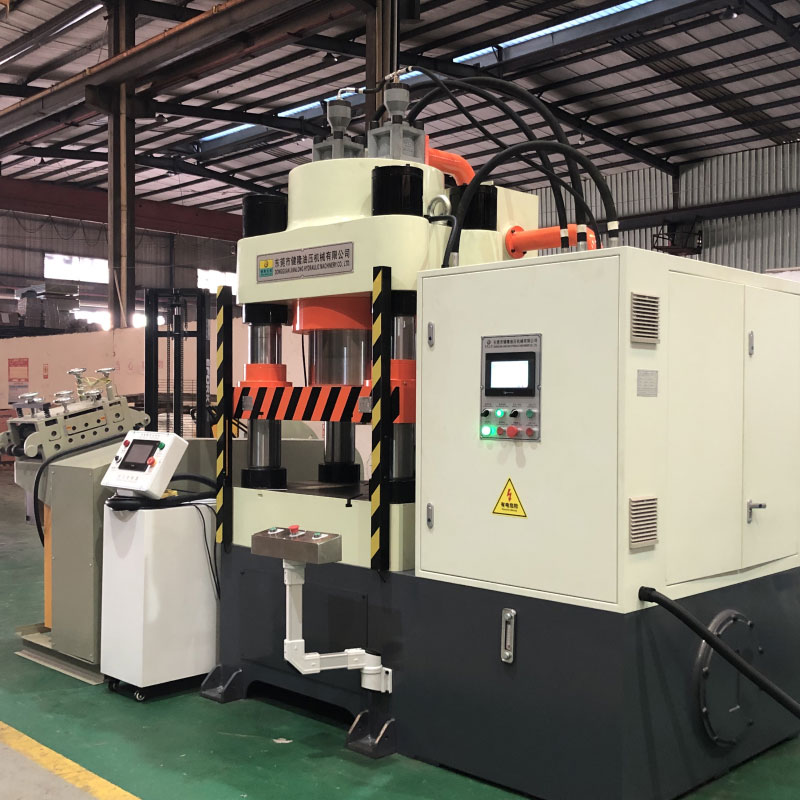
We hope this detailed process flow description helps you better understand the entire process of stamping gold bars and gold brick logos. If you have further questions about any aspect, such as pressure calculation or equipment selection, please feel free to contact us. For more information/advice on hydraulic presses for stamping gold bars and gold bricks, or to purchase other high-quality hydraulic presses, please contact us (or scan the WhatsApp QR code below). Jianlong Hydraulic Technology will provide you with personalized and customized professional solutions and is dedicated to serving you.

Contact: Jojo
Phone: 18822971180
E-mail: lifuyan78@gmail.com
Whatsapp:+8618822971180
Add: Guangyi Industrial Park, No.2 Jinfu West Road, Tanglip, Liaobu Town, Dongguan City, Guangdong Province, China
We chat