
lifuyan78@gmail.com
18822971180
The main process types for frame-type hydraulic presses can be categorized based on their core functions. The following information is provided by the team at Jianlong Hydraulic Technology; please feel free to contact us with inquiries!
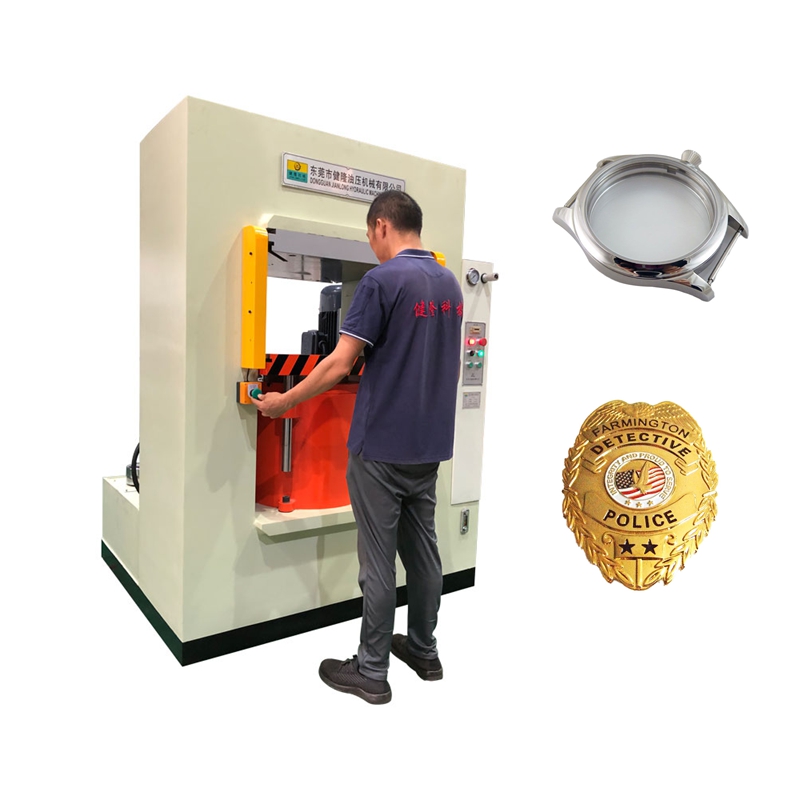
1. Metal Plastic Forming Processes
1.1 Deep Drawing: Pressing flat blanks into hollow parts such as cups or boxes (e.g., kitchen sinks, automotive body panels).
1.2 Blanking/Shearing: Separating sheet metal using dies; includes operations like punching, blanking, and trimming.
1.3 Bending and Flanging: Bending sheet metal to specific angles or curvatures, or turning up vertical edges along the periphery.
1.4 Cold Extrusion: Inducing plastic flow in metal within a die at room temperature to form parts with complex cross-sections.
1.5 Calibration and Straightening: Applying pressure to deformed workpieces (such as shafts or beams) to restore dimensional accuracy and shape.
2. Press-Fitting and Forging Processes
2.1 Press-Fitting: An interference-fit process involving the pressing of parts—such as shafts, bearings, or gears—into holes or onto shafts.
2.2 Forging: Includes open-die forging, closed-die forging, upsetting, and drawing out; used for shaping alloy steel and non-ferrous metal blanks.
2.3 Powder Metallurgy Compacting: Compressing metal powder into blanks of specific shapes and densities.
3. Composite Material Molding Processes
3.1 SMC/BMC/DMC Molding: Curing sheet or bulk molding compounds (SMC/BMC/DMC) under heat and pressure within a mold.
3.2 GMT/LFT Hot Pressing: Hot-press molding of glass-fiber-reinforced thermoplastic materials.
3.3 Other Composite Materials: Out-of-autoclave molding of prepregs (e.g., carbon fiber, aramid fiber).
4. Other Pressing Processes
4.1 Rubber and Grinding Wheel Pressing: Molding products that require high pressure, such as rubber components and grinding wheels.
4.2 Environmental Recycling Pressing: Compacting materials like metal chips, waste paper, and plastics into bales or briquettes. 4.3 Magnetic material pressing: Compression molding of magnetic powders such as ferrite and NdFeB (neodymium-iron-boron).
5. Classification by process temperature
5.1 Cold pressing: Performed at ambient temperature; examples include cold extrusion, blanking, and press-fitting.
5.2 Warm pressing: Pressing performed with heating to below the recrystallization temperature to improve formability.
5.3 Hot pressing: Forming performed under heated conditions; examples include composite material molding and hot forging.
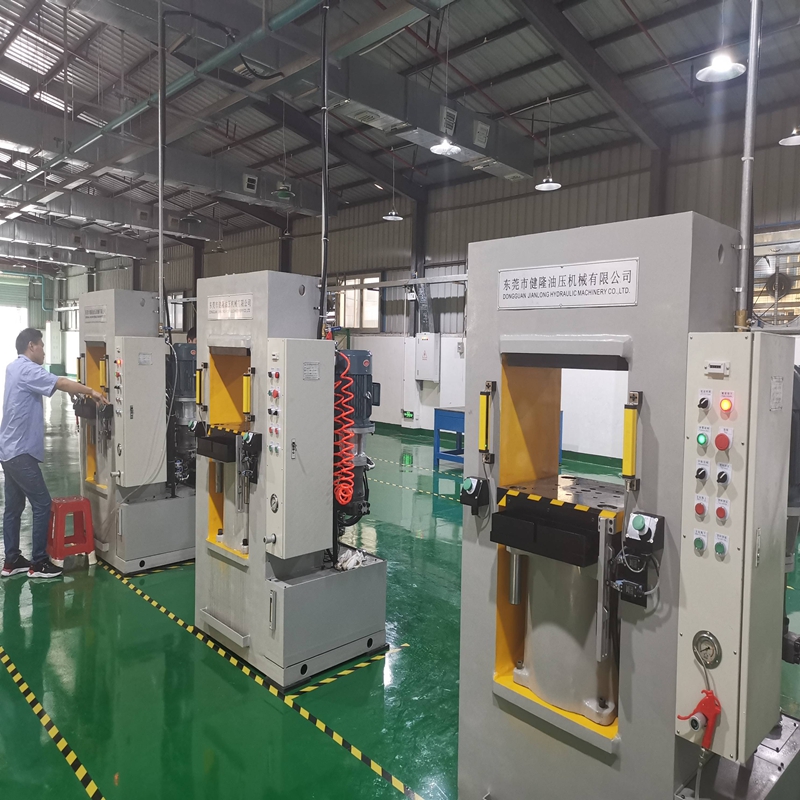
In summary, the process capabilities of frame-type hydraulic presses cover virtually all categories of pressure processing—including separation, forming, press-fitting, forging, and molding. Their high-rigidity frames make them particularly suitable for applications requiring high tonnage, high precision, or the ability to withstand off-center loads. Please contact us for further information or inquiries regarding frame-type hydraulic presses. Jianlong Hydraulic Technology currently offers customized frame-type hydraulic presses ranging from 100 to 5,000 tons, backed by mature technology and extensive experience (including the integration of automated production lines, chillers, air compressors, and other auxiliary equipment). All hydraulic presses are CE certified and fully compliant with the EU Machinery Directive (2006/42/EC); our products are exported to markets in Europe and the Americas, including Germany, the USA, Mexico, and Portugal. If you have any questions or purchasing requirements, please contact us (or scan the WhatsApp QR code below); Jianlong Hydraulic Technology is dedicated to providing you with personalized, customized professional solutions and exceptional service.

Contact: Jojo
Phone: 18822971180
E-mail: lifuyan78@gmail.com
Whatsapp:+8618822971180
Add: Guangyi Industrial Park, No.2 Jinfu West Road, Tanglip, Liaobu Town, Dongguan City, Guangdong Province, China
We chat